Fire behavior of styrofoam
Styrofoam burns like e.g.wood. For the purpose of construction, styrofoam is made selfextinguishing.
No toxic vapours arise on burning, as you can take from the following table:
| Gaseous decomposition products when smoldering or burning polystyrene compared to reference building materials. | ||||
| Fire composition in ppm at test temperature | ||||
| Components of the fire gases | | | | |
| Styrofoam | ||||
| Carbon monoxyde | 10 +* | 50 +* | 500 +* | 1,000 ** |
| Monostyrene | 50 | 100 | 500 | 50 |
| Other aromatics | Traces | 20 | 20 | 10 |
| Hydrogen bromide | 10 | 15 | 13 | 11 |
| Spruce | ||||
| Carbon monoxyde | 400 * | 6,000 ** | 12,000 ** | 15,000 ** |
| Aromatics | - | - | - | 300 |
| Wood fibre insulation boards | ||||
| Carbon monoxide | 14,000 ** | 24,000 ** | 59,000 ** | 69,000 ** |
| Aromatics | Traces | 300 | 300 | 1,000 |
| Expanded cork | ||||
| Carbon monoxide | 1,000 * | 3,000 ** | 15,000 ** | 29,000 ** |
| Aromatics | Traces | 200 | 1,000 | 1,000 |
| ||||
|
| Table reprinted with the kind permission of the German IVH Industrieverband Hartschaum e.v. (Heidelberg) |
|
The most boring video in the world! |

|
Small building for pool equipment with polystyrene ceiling |
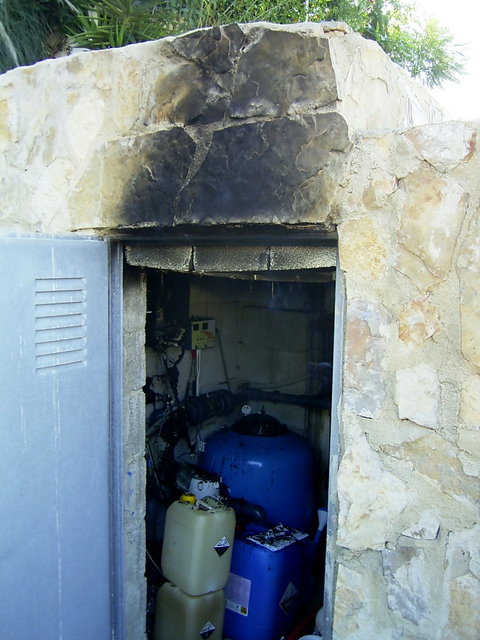
|
You can see that the flames burned the polystyrene, but where the flames didn't reach, nothing else burned. This means it's difficult to ignite. |
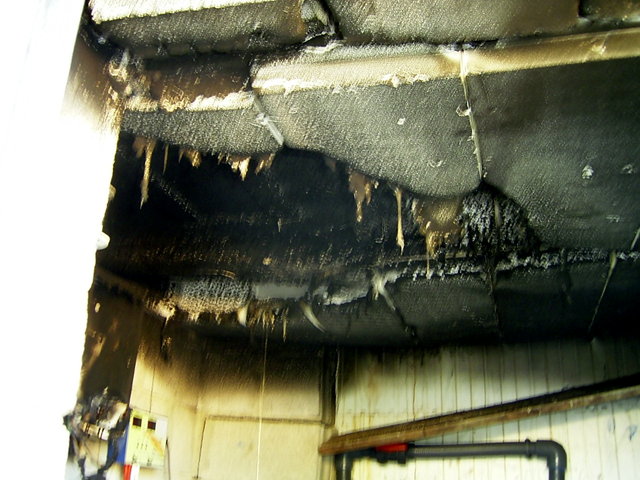
|
Here it is more clearly visible that the flame-resistant polystyrene prevented the fire from spreading and caused it to extinguish itself. |
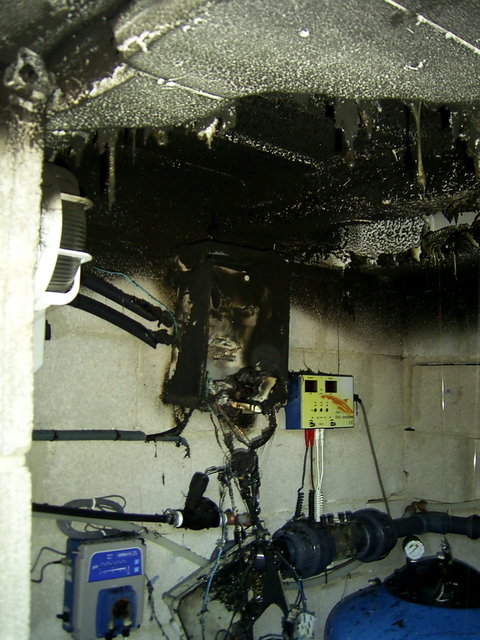
|
Here in the background you can also see the wall of the pool made of polystyrene blocks and that the ceiling did not catch fire. |
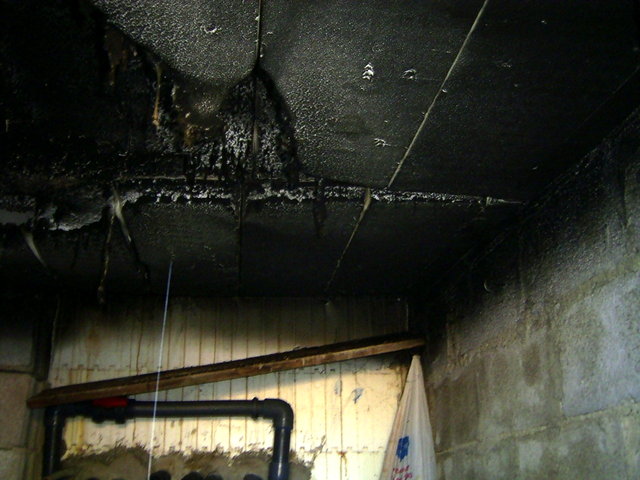
|
A real fire |
continue to Architects - Dew Point Information